 EN
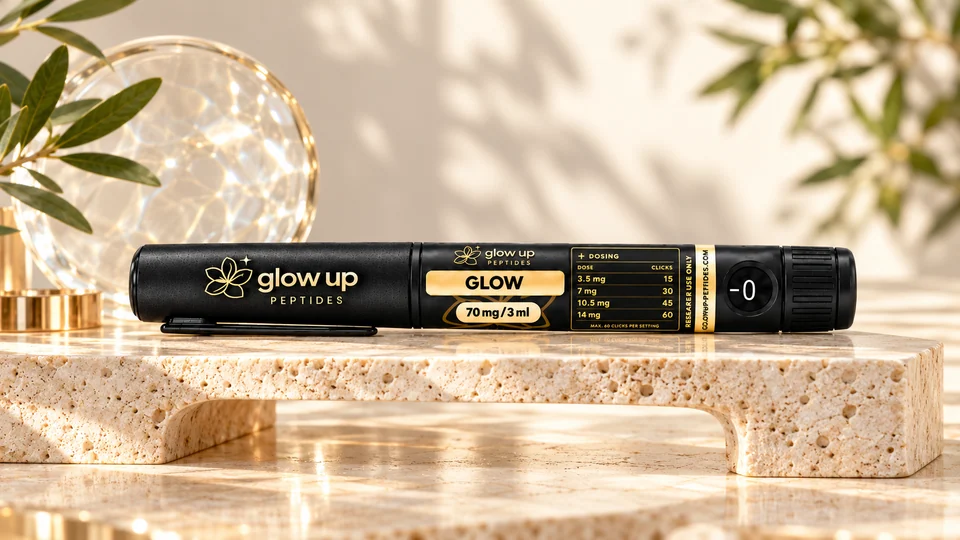
Composition
| Component | Total content |
|---|---|
| GHK-Cu | 50 mg |
| TB-500 | 10 mg |
| BPC-157 | 10 mg |
| Total | 70 mg |
Considering the components separately
GHK-Cu, TB-500 and BPC-157 are different research compounds. Their individual profiles discuss separate models. A shared pen introduces an additional formulation question and does not establish enhanced or synergistic effects.
Mixtures need suitable controls
An informative experiment compares the mixture with suitable controls and, where relevant, the individual components. This is necessary to distinguish additive effects, interactions and measurement artefacts. Equal total masses are not equivalent to equal molecular amounts.
Quality of the finished formulation
A blend needs assessment as a finished formulation: each component’s identity and content, suitable stability data and traceable batch records. Testing of an individual compound does not automatically answer questions about the shared solution or container.
Total amount and concentration
The sum on the label is the total product content. Concentration calculations additionally require actual volume. Labelling, batch documentation and the validated laboratory protocol need to agree; this article provides no use instructions.
Sources & context
The linked individual profiles document component literature. This article describes catalogue composition; it does not claim that the finished mixture has been tested.
Sources concern the models and preparations investigated, rather than a particular shop batch. Research products are intended exclusively for laboratory research, not for human use.
Reading studies carefully →GLOW
Check formats, total content and current availability directly in the catalogue. The label and batch documentation remain authoritative.